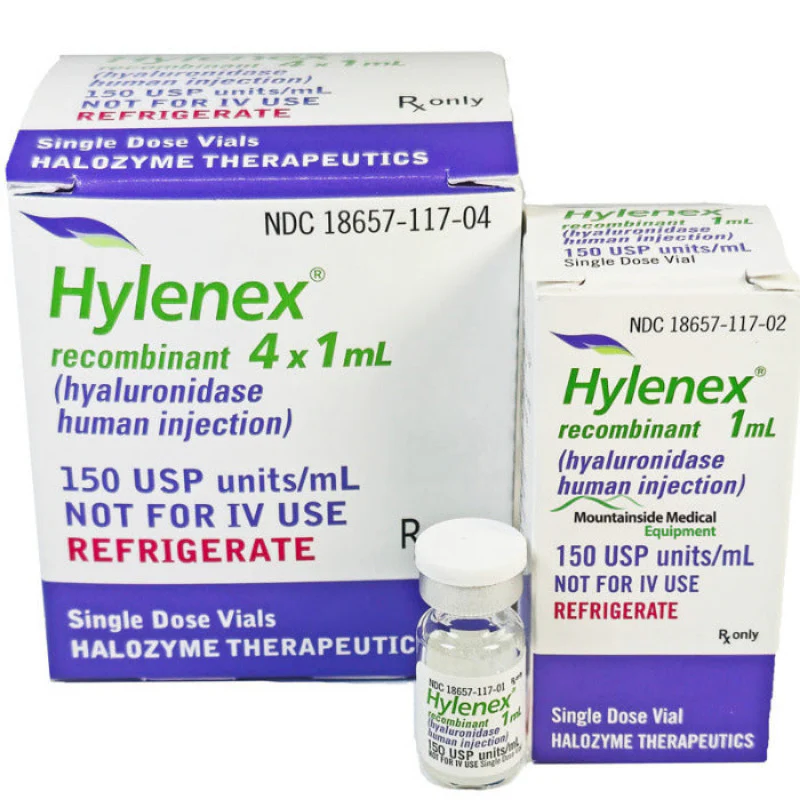
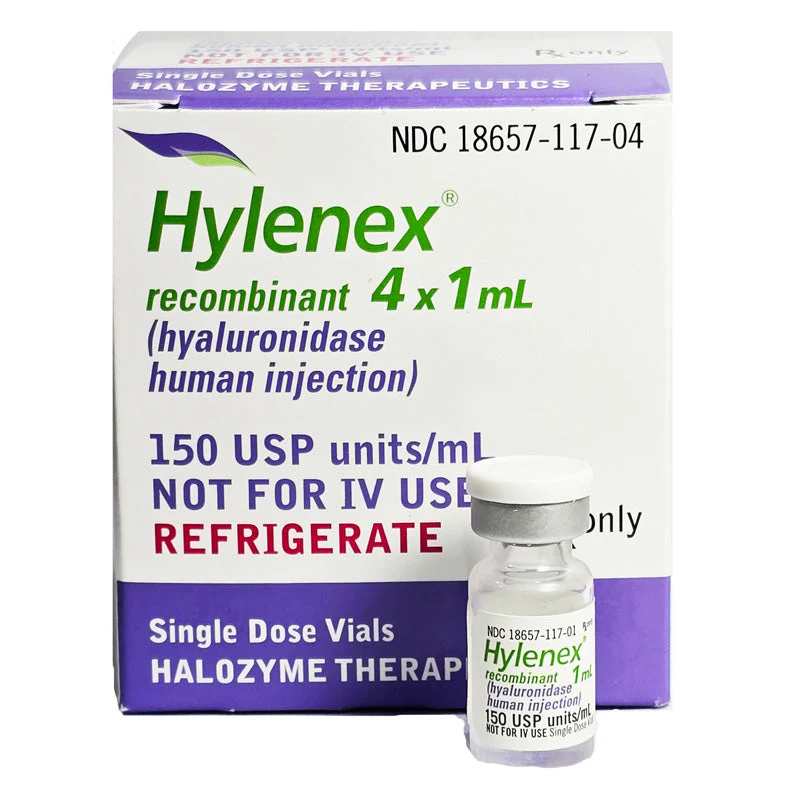
Hylenex Injection (Hyaluronidase Human Recombinant) 150 Unit Dose (Rx) * Refrigerated
Hylenex is the brand name for a recombinant human hyaluronidase enzyme given by injection. Hyaluronidase is sometimes nicknamed a “spreading factor” because it helps make tissues more permeable, allowing fluids or medications injected under the skin to spread and be absorbed more easily. Normally, our connective tissue contains a gel-like substance called hyaluronic acid that helps hold cells and fluids in place. Hylenex works by temporarily breaking down hyaluronic acid, which in turn loosens the spaces between cells. This effect creates a window of time during which injected fluids or drugs can disperse rapidly through the tissue. After a short period (within 24–48 hours), the body naturally rebuilds the hyaluronic acid and tissue permeability returns to normal. Hylenex itself doesn’t treat a disease directly; instead, it’s used as a supportive agent to enhance the delivery and absorption of other therapies. It’s a clear, colorless solution and is a form of hyaluronidase that’s produced via genetic engineering (meaning it’s a human enzyme made in a lab). This recombinant form tends to be less likely to cause allergic reactions compared to older forms of hyaluronidase that were extracted from animal sources.
Hylenex Injection (Hyaluronidase Human Recombinant) is a breakthrough prescription medication designed to increase the absorption and dispersion of subcutaneously administered drugs and fluids. Indicated for adults and pediatric patients, Hylenex® by Halozyme Therapeutics is the preferred enzyme facilitator for a wide range of medical scenarios including subcutaneous fluid administration (hypodermoclysis), drug infiltration, and subcutaneous rehydration. Boost therapeutic efficacy, speed up absorption, and maximize patient outcomes with this FDA-approved, recombinant human protein.
Recombinant human hyaluronidase is made by inserting the gene that encodes for human hyaluronidase into cultured cells, which then produce the enzyme. This recombinant form is highly purified and reduces the risk of allergic reactions compared to animal-derived forms.
Hyaluronidase human recombinant is commonly used in medicine to increase the absorption and dispersion of other injected drugs, fluids, or contrast agents, such as in subcutaneous fluid therapy, ophthalmic surgery, or to accelerate the absorption of certain medicines. It can also be used to improve the delivery of subcutaneous infusions or to manage complications associated with misplaced fillers (such as hyaluronic acid dermal fillers in cosmetic procedures).
Mechanism of action: The enzyme works by temporarily breaking down hyaluronic acid in the tissue’s extracellular matrix, making tissues more permeable and less viscous. This enhanced tissue permeability allows injected substances to spread more easily through the subcutaneous space.
How Hylenex Injection Works
Hylenex functions as a tissue permeability modifier by breaking down hyaluronic acid, a natural, gel-like substance found in the body's tissues. By temporarily degrading this component, Hylenex increases tissue permeability, allowing other injected substances to spread and be absorbed more efficiently.
Indications & Therapeutic Uses
- Increase absorption/dispersion of SC and IM drugs
- Adjunct to SC or IM fluid administration (hypodermoclysis)
- Subcutaneous insulin infusion enhancement
- Treatment of drug or fluid extravasation/infiltration
- Improvement of local anesthetic effect for minor procedures
- Facilitation of contrast media absorption in radiology/CT
Hylenex vs Vitrase: Key Differences
- Hylenex – Recombinant (non-animal), lower allergy risk, consistent supply, versatile use, and hospital pharmacy preference.
- Vitrase – Animal-derived (ovine/human), higher risk of allergic reaction, may have slightly different cost and supply chain issues.
- Clinical Outcome: Studies show Hylenex and Vitrase have similar efficacy, but Hylenex is often favored for safety and cost-effectiveness.

Hylenex is essentially a facilitating agent: it’s a recombinant form of the enzyme hyaluronidase that medical professionals use to speed up the absorption and dispersion of injected fluids or medications. By temporarily breaking down the natural gel-like barrier in our tissue (hyaluronic acid), Hylenex lets subcutaneous injections behave more like IV injections in terms of uptake. It’s used for purposes like subcutaneous hydration (to treat dehydration when IV lines aren’t feasible), enhancing the effectiveness of other injected drugs (for example, making a local anesthetic spread more evenly or helping an injected antibiotic reach a broader area), and even in certain imaging techniques to improve contrast distribution. Additionally, although off-label, it’s popularly known in dermatology for its ability to dissolve hyaluronic acid fillers if needed. Hylenex is administered by injection, usually in a hospital or clinic setting, and it acts as a sort of “assistant” to other therapies rather than a stand-alone treatment. Most people do not experience significant side effects from Hylenex; the enzyme does its job and is cleared fairly quickly. However, as with any injectable protein, there’s a small risk of allergic reaction, and it should be used with proper medical guidance and technique. In summary, Hylenex helps medications and fluids work better by making your tissues more permeable – a useful tool in the hands of healthcare providers for improving the speed and reach of treatments given under the skin.
Product Information
Product Information
Shipping & Returns
Shipping & Returns

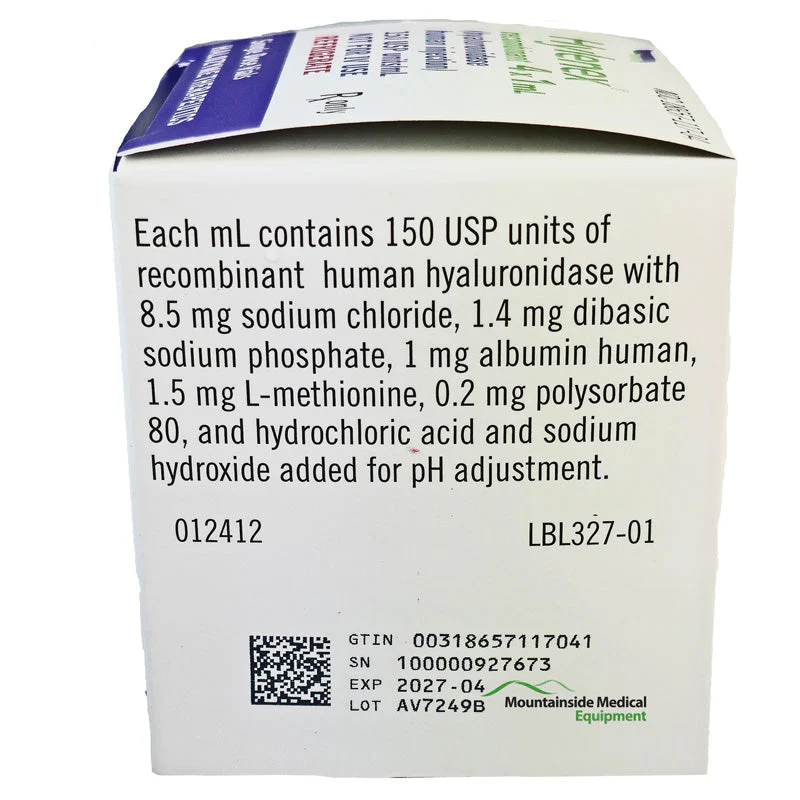
Hylenex Injection (Hyaluronidase Human Recombinant) 150 Unit Dose (Rx) * Refrigerated
Hylenex Injection (Hyaluronidase Human Recombinant) 150 Unit Dose (Rx) * Refrigerated
Hylenex is the brand name for a recombinant human hyaluronidase enzyme given by injection. Hyaluronidase is sometimes nicknamed a “spreading factor” because it helps make tissues more permeable, allowing fluids or medications injected under the skin to spread and be absorbed more easily. Normally, our connective tissue contains a gel-like substance called hyaluronic acid that helps hold cells and fluids in place. Hylenex works by temporarily breaking down hyaluronic acid, which in turn loosens the spaces between cells. This effect creates a window of time during which injected fluids or drugs can disperse rapidly through the tissue. After a short period (within 24–48 hours), the body naturally rebuilds the hyaluronic acid and tissue permeability returns to normal. Hylenex itself doesn’t treat a disease directly; instead, it’s used as a supportive agent to enhance the delivery and absorption of other therapies. It’s a clear, colorless solution and is a form of hyaluronidase that’s produced via genetic engineering (meaning it’s a human enzyme made in a lab). This recombinant form tends to be less likely to cause allergic reactions compared to older forms of hyaluronidase that were extracted from animal sources.
Hylenex Injection (Hyaluronidase Human Recombinant) is a breakthrough prescription medication designed to increase the absorption and dispersion of subcutaneously administered drugs and fluids. Indicated for adults and pediatric patients, Hylenex® by Halozyme Therapeutics is the preferred enzyme facilitator for a wide range of medical scenarios including subcutaneous fluid administration (hypodermoclysis), drug infiltration, and subcutaneous rehydration. Boost therapeutic efficacy, speed up absorption, and maximize patient outcomes with this FDA-approved, recombinant human protein.
Recombinant human hyaluronidase is made by inserting the gene that encodes for human hyaluronidase into cultured cells, which then produce the enzyme. This recombinant form is highly purified and reduces the risk of allergic reactions compared to animal-derived forms.
Hyaluronidase human recombinant is commonly used in medicine to increase the absorption and dispersion of other injected drugs, fluids, or contrast agents, such as in subcutaneous fluid therapy, ophthalmic surgery, or to accelerate the absorption of certain medicines. It can also be used to improve the delivery of subcutaneous infusions or to manage complications associated with misplaced fillers (such as hyaluronic acid dermal fillers in cosmetic procedures).
Mechanism of action: The enzyme works by temporarily breaking down hyaluronic acid in the tissue’s extracellular matrix, making tissues more permeable and less viscous. This enhanced tissue permeability allows injected substances to spread more easily through the subcutaneous space.
How Hylenex Injection Works
Hylenex functions as a tissue permeability modifier by breaking down hyaluronic acid, a natural, gel-like substance found in the body's tissues. By temporarily degrading this component, Hylenex increases tissue permeability, allowing other injected substances to spread and be absorbed more efficiently.
Indications & Therapeutic Uses
- Increase absorption/dispersion of SC and IM drugs
- Adjunct to SC or IM fluid administration (hypodermoclysis)
- Subcutaneous insulin infusion enhancement
- Treatment of drug or fluid extravasation/infiltration
- Improvement of local anesthetic effect for minor procedures
- Facilitation of contrast media absorption in radiology/CT
Hylenex vs Vitrase: Key Differences
- Hylenex – Recombinant (non-animal), lower allergy risk, consistent supply, versatile use, and hospital pharmacy preference.
- Vitrase – Animal-derived (ovine/human), higher risk of allergic reaction, may have slightly different cost and supply chain issues.
- Clinical Outcome: Studies show Hylenex and Vitrase have similar efficacy, but Hylenex is often favored for safety and cost-effectiveness.
Hylenex is essentially a facilitating agent: it’s a recombinant form of the enzyme hyaluronidase that medical professionals use to speed up the absorption and dispersion of injected fluids or medications. By temporarily breaking down the natural gel-like barrier in our tissue (hyaluronic acid), Hylenex lets subcutaneous injections behave more like IV injections in terms of uptake. It’s used for purposes like subcutaneous hydration (to treat dehydration when IV lines aren’t feasible), enhancing the effectiveness of other injected drugs (for example, making a local anesthetic spread more evenly or helping an injected antibiotic reach a broader area), and even in certain imaging techniques to improve contrast distribution. Additionally, although off-label, it’s popularly known in dermatology for its ability to dissolve hyaluronic acid fillers if needed. Hylenex is administered by injection, usually in a hospital or clinic setting, and it acts as a sort of “assistant” to other therapies rather than a stand-alone treatment. Most people do not experience significant side effects from Hylenex; the enzyme does its job and is cleared fairly quickly. However, as with any injectable protein, there’s a small risk of allergic reaction, and it should be used with proper medical guidance and technique. In summary, Hylenex helps medications and fluids work better by making your tissues more permeable – a useful tool in the hands of healthcare providers for improving the speed and reach of treatments given under the skin.
Original: $159.00
-70%$159.00
$47.70Product Information
Product Information
Shipping & Returns
Shipping & Returns
Description
Hylenex is the brand name for a recombinant human hyaluronidase enzyme given by injection. Hyaluronidase is sometimes nicknamed a “spreading factor” because it helps make tissues more permeable, allowing fluids or medications injected under the skin to spread and be absorbed more easily. Normally, our connective tissue contains a gel-like substance called hyaluronic acid that helps hold cells and fluids in place. Hylenex works by temporarily breaking down hyaluronic acid, which in turn loosens the spaces between cells. This effect creates a window of time during which injected fluids or drugs can disperse rapidly through the tissue. After a short period (within 24–48 hours), the body naturally rebuilds the hyaluronic acid and tissue permeability returns to normal. Hylenex itself doesn’t treat a disease directly; instead, it’s used as a supportive agent to enhance the delivery and absorption of other therapies. It’s a clear, colorless solution and is a form of hyaluronidase that’s produced via genetic engineering (meaning it’s a human enzyme made in a lab). This recombinant form tends to be less likely to cause allergic reactions compared to older forms of hyaluronidase that were extracted from animal sources.
Hylenex Injection (Hyaluronidase Human Recombinant) is a breakthrough prescription medication designed to increase the absorption and dispersion of subcutaneously administered drugs and fluids. Indicated for adults and pediatric patients, Hylenex® by Halozyme Therapeutics is the preferred enzyme facilitator for a wide range of medical scenarios including subcutaneous fluid administration (hypodermoclysis), drug infiltration, and subcutaneous rehydration. Boost therapeutic efficacy, speed up absorption, and maximize patient outcomes with this FDA-approved, recombinant human protein.
Recombinant human hyaluronidase is made by inserting the gene that encodes for human hyaluronidase into cultured cells, which then produce the enzyme. This recombinant form is highly purified and reduces the risk of allergic reactions compared to animal-derived forms.
Hyaluronidase human recombinant is commonly used in medicine to increase the absorption and dispersion of other injected drugs, fluids, or contrast agents, such as in subcutaneous fluid therapy, ophthalmic surgery, or to accelerate the absorption of certain medicines. It can also be used to improve the delivery of subcutaneous infusions or to manage complications associated with misplaced fillers (such as hyaluronic acid dermal fillers in cosmetic procedures).
Mechanism of action: The enzyme works by temporarily breaking down hyaluronic acid in the tissue’s extracellular matrix, making tissues more permeable and less viscous. This enhanced tissue permeability allows injected substances to spread more easily through the subcutaneous space.
How Hylenex Injection Works
Hylenex functions as a tissue permeability modifier by breaking down hyaluronic acid, a natural, gel-like substance found in the body's tissues. By temporarily degrading this component, Hylenex increases tissue permeability, allowing other injected substances to spread and be absorbed more efficiently.
Indications & Therapeutic Uses
- Increase absorption/dispersion of SC and IM drugs
- Adjunct to SC or IM fluid administration (hypodermoclysis)
- Subcutaneous insulin infusion enhancement
- Treatment of drug or fluid extravasation/infiltration
- Improvement of local anesthetic effect for minor procedures
- Facilitation of contrast media absorption in radiology/CT
Hylenex vs Vitrase: Key Differences
- Hylenex – Recombinant (non-animal), lower allergy risk, consistent supply, versatile use, and hospital pharmacy preference.
- Vitrase – Animal-derived (ovine/human), higher risk of allergic reaction, may have slightly different cost and supply chain issues.
- Clinical Outcome: Studies show Hylenex and Vitrase have similar efficacy, but Hylenex is often favored for safety and cost-effectiveness.
Hylenex is essentially a facilitating agent: it’s a recombinant form of the enzyme hyaluronidase that medical professionals use to speed up the absorption and dispersion of injected fluids or medications. By temporarily breaking down the natural gel-like barrier in our tissue (hyaluronic acid), Hylenex lets subcutaneous injections behave more like IV injections in terms of uptake. It’s used for purposes like subcutaneous hydration (to treat dehydration when IV lines aren’t feasible), enhancing the effectiveness of other injected drugs (for example, making a local anesthetic spread more evenly or helping an injected antibiotic reach a broader area), and even in certain imaging techniques to improve contrast distribution. Additionally, although off-label, it’s popularly known in dermatology for its ability to dissolve hyaluronic acid fillers if needed. Hylenex is administered by injection, usually in a hospital or clinic setting, and it acts as a sort of “assistant” to other therapies rather than a stand-alone treatment. Most people do not experience significant side effects from Hylenex; the enzyme does its job and is cleared fairly quickly. However, as with any injectable protein, there’s a small risk of allergic reaction, and it should be used with proper medical guidance and technique. In summary, Hylenex helps medications and fluids work better by making your tissues more permeable – a useful tool in the hands of healthcare providers for improving the speed and reach of treatments given under the skin.