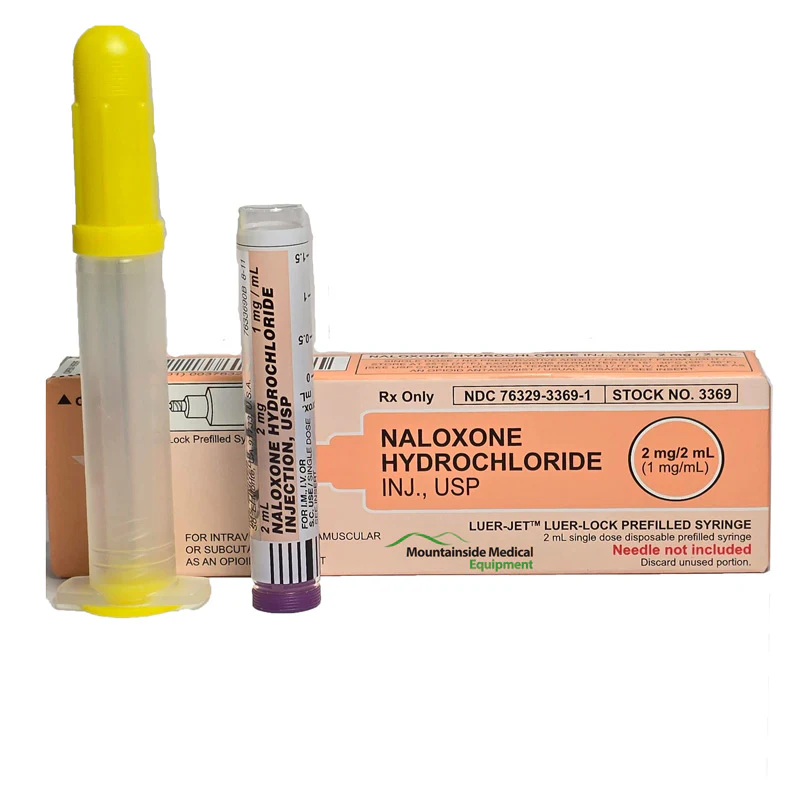
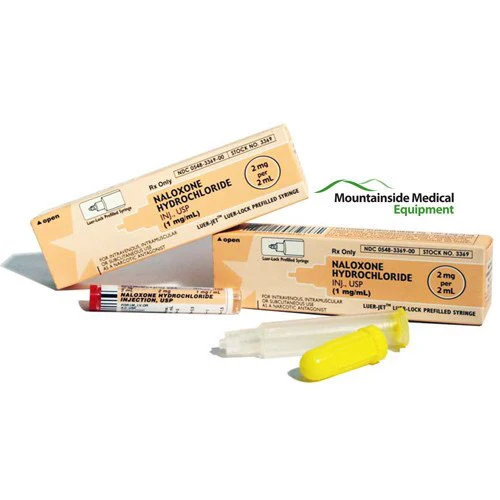
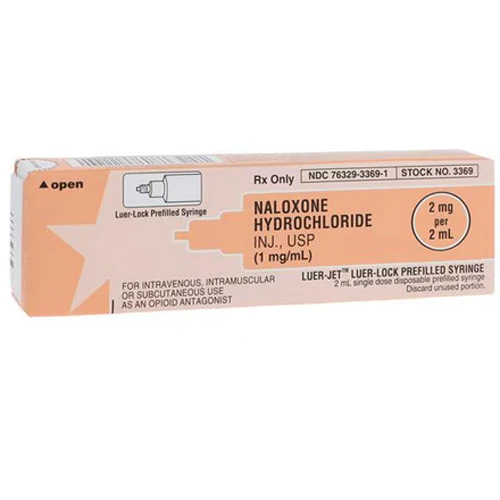
Naloxone Prefilled Syringe for Injection 2mg Dose (Rx)
Naloxone prefilled syringe refers to a ready-to-use syringe that comes pre-loaded with naloxone solution, intended for quick administration during an opioid overdose emergency. Naloxone itself is a medication that rapidly reverses the effects of opioids (such as heroin, fentanyl, or prescription painkillers) by binding to opioid receptors and blocking or displacing the opioid molecules. This antidote can restore normal breathing in a person whose breathing has slowed or stopped due to an overdose.
Current Expiration : October 2026
Uses:
- Life-Saving Opioid Overdose Treatment
- Crucial for Fentanyl, Heroin, Prescription Painkiller Overdose
- Restores Normal Breathing Until Emergency Help Arrives
- Prevents Fatalities and Severe Brain Injury
- Integral Part of Harm Reduction and Public Health Programs
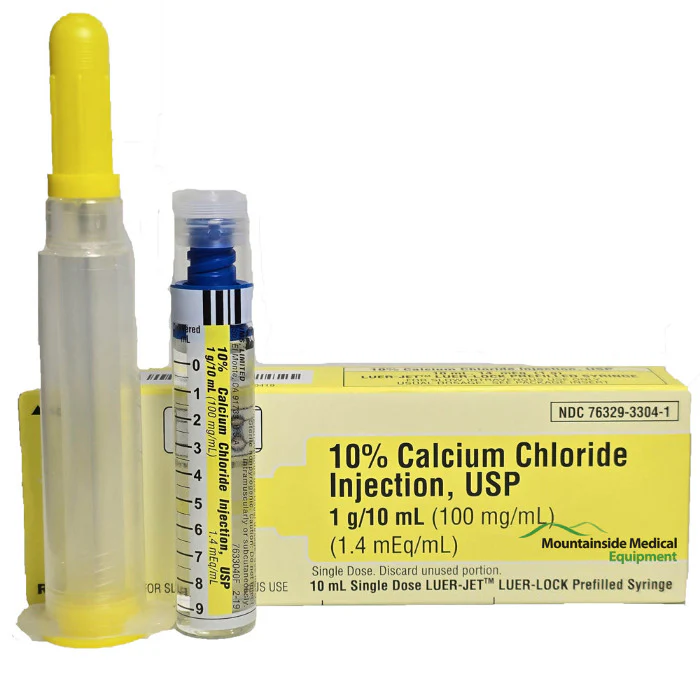
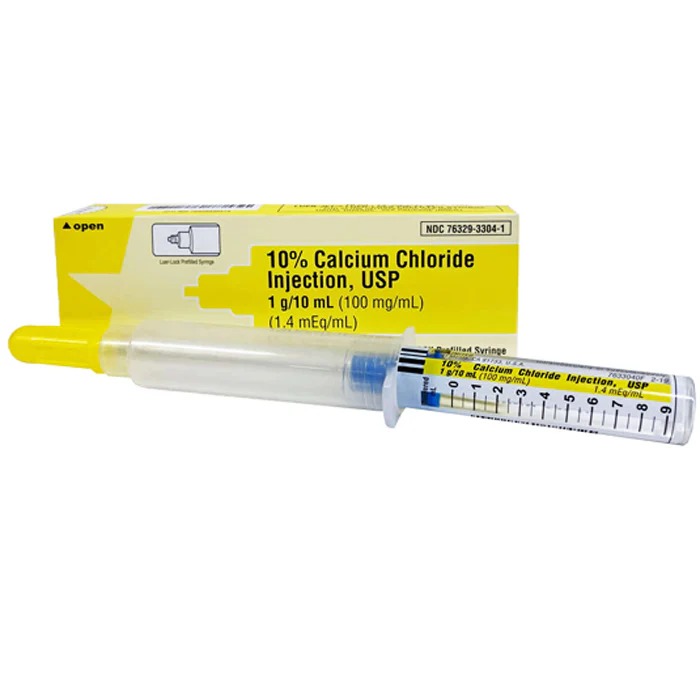
When we say “prefilled syringe,” it means the syringe is already filled by the manufacturer with a specific dose of naloxone, so a rescuer doesn’t have to draw up the medication from a vial. It’s essentially naloxone in an injectable form, packaged for immediate use. Prefilled syringes are designed to make naloxone administration simpler and faster for both medical professionals and everyday people who might be responding to an overdose.
Key features of a Naloxone Prefilled Syringe:
-
Pre-Measured Dose: The syringe contains a set amount of naloxone, often a standard dose such as 2 mg in 2 mL or 1 mg in 1 mL of solution (concentrations can vary by product). Because the dose is pre-measured, the user doesn’t need to worry about calculating or measuring the medication in the moment – they simply use the syringe as instructed. This reduces the chance of dosing errors and saves valuable time when responding to an overdose.
-
Administration Routes: A naloxone prefilled syringe is typically intended for injection into a muscle (intramuscular, e.g., into the outer thigh or shoulder) or under the skin (subcutaneous), though in hospital settings it can be given intravenously. In community overdose kits, the most common use of a prefilled naloxone syringe is intramuscular injection. The syringe often comes with a needle or the kit includes a separate needle that you attach. To use it, you would remove safety caps, insert the needle into the person’s thigh (through clothing if necessary), and push the plunger to inject the medication. Naloxone usually works within 2-3 minutes to start reversing respiratory depression.
-
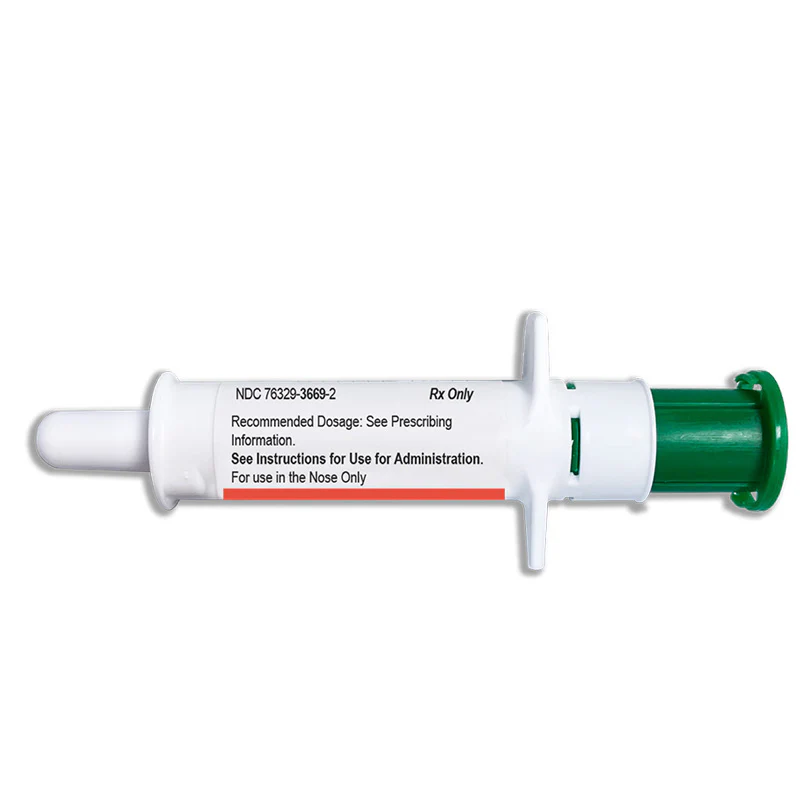
Intranasal Use with Adapter: Some naloxone prefilled syringes are also used for intranasal administration (through the nose) by adding a special atomizer tip. In many community programs, naloxone is supplied as a prefilled syringe (typically 2 mg of naloxone in 2 mL) plus a mucosal atomization device that attaches to the syringe. In an overdose, the responder twists the atomizer onto the syringe, then sprays half the dose up one nostril and half up the other. The liquid is atomized into a fine mist that is absorbed through the nasal lining. This method allows bystanders to give naloxone without using a needle. (Note: More recently, single-step nasal spray devices like Narcan® have become popular, but the prefilled syringe + atomizer is still used in many kits because it’s cost-effective and easy to assemble.)
-
Ease of Use in Emergencies: The whole point of a prefilled syringe is to be quick and straightforward:
- There’s no need to draw medicine from a vial (which can be tricky in a high-stress situation).
- The plunger is ready to push and deliver the naloxone.
- Some products have clear markings and often even come with brief instructions in the kit. In some cases, the syringe might be a specially designed auto-injector (like the now-discontinued Evzio®, which would talk the user through the steps); but typically “prefilled syringe” refers to a more basic design that you operate manually.
- These syringes are portable and usually included in opioid overdose rescue kits distributed to opioid users, their friends/family, first responders, and community organizations. They often have a shelf-life of a year or more and should be stored at room temperature (not extreme heat or freezing) and protected from light.
-
Examples of Prefilled Naloxone Syringes:
- One example is the “needle-free” intranasal kit: a 2 mL prefilled naloxone syringe (concentration 1 mg/mL) that is used with a nasal atomizer. Many public health programs have used this format.
- Another example is ZIMHI™, a more recently approved product (in the U.S.) which is a prefilled single-dose syringe intended for intramuscular injection, containing a 5 mg dose of naloxone in 0.5 mL. It’s designed for layperson use with minimal steps (pull off cap, inject into thigh muscle, push plunger). This provides a higher dose of naloxone for potent synthetic opioid overdoses.
- In some countries, there are prefilled syringes with naloxone that come with standard luer-lock fittings, often used by medical personnel or included in first aid kits (for example, a 1 mL prefilled syringe with 1 mg naloxone HCl for hospital use, or a 2 mL syringe with 2 mg for community use).
-
Comparison to Other Naloxone Forms: Besides prefilled syringes, naloxone also comes in:
- Vials or ampoules (small bottles) which require drawing the medication into a syringe manually. This is common in hospitals and EMS but less convenient for untrained people.
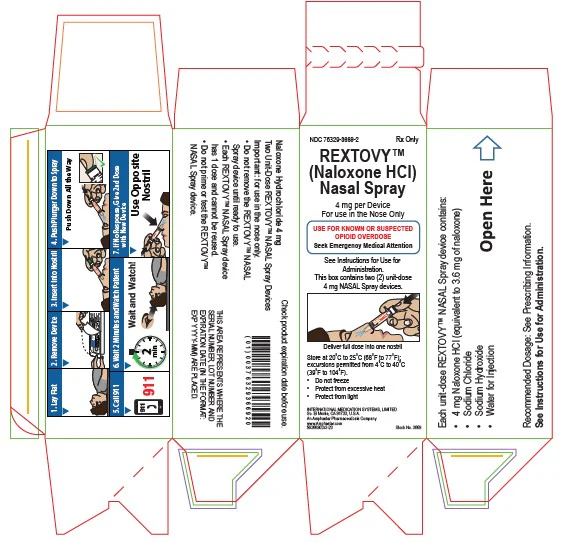
- Nasal sprays (like Narcan® Nasal Spray or generic naloxone nasal spray) which are ready-to-use devices you spray into one nostril—these are easy to use but typically more expensive per dose.
- Auto-injectors (like the Evzio® device, which was a talking injector pen with naloxone) – very user-friendly but costly; not as widely available now due to price issues.
The prefilled syringe lies somewhat in between the basic vial method and the high-tech auto-injector – it’s relatively inexpensive and straightforward, requiring a little more user action than an autoinjector, but far less than drawing from a vial. Its big advantage is speed and simplicity when every second counts.
A naloxone prefilled syringe is a life-saving emergency medication device: it’s naloxone in a syringe that’s already filled to the correct dose, allowing rapid injection (often into a muscle) or nasal administration (with an adapter) to counteract opioid overdoses. It's a crucial tool in the effort to reduce fatal overdoses, designed to be user-friendly so that even non-medical individuals can administer naloxone quickly when someone’s life is at risk from opioids.
Product Information
Product Information
Shipping & Returns
Shipping & Returns
Naloxone Prefilled Syringe for Injection 2mg Dose (Rx)
Naloxone Prefilled Syringe for Injection 2mg Dose (Rx)
Naloxone prefilled syringe refers to a ready-to-use syringe that comes pre-loaded with naloxone solution, intended for quick administration during an opioid overdose emergency. Naloxone itself is a medication that rapidly reverses the effects of opioids (such as heroin, fentanyl, or prescription painkillers) by binding to opioid receptors and blocking or displacing the opioid molecules. This antidote can restore normal breathing in a person whose breathing has slowed or stopped due to an overdose.
Current Expiration : October 2026
Uses:
- Life-Saving Opioid Overdose Treatment
- Crucial for Fentanyl, Heroin, Prescription Painkiller Overdose
- Restores Normal Breathing Until Emergency Help Arrives
- Prevents Fatalities and Severe Brain Injury
- Integral Part of Harm Reduction and Public Health Programs
When we say “prefilled syringe,” it means the syringe is already filled by the manufacturer with a specific dose of naloxone, so a rescuer doesn’t have to draw up the medication from a vial. It’s essentially naloxone in an injectable form, packaged for immediate use. Prefilled syringes are designed to make naloxone administration simpler and faster for both medical professionals and everyday people who might be responding to an overdose.
Key features of a Naloxone Prefilled Syringe:
-
Pre-Measured Dose: The syringe contains a set amount of naloxone, often a standard dose such as 2 mg in 2 mL or 1 mg in 1 mL of solution (concentrations can vary by product). Because the dose is pre-measured, the user doesn’t need to worry about calculating or measuring the medication in the moment – they simply use the syringe as instructed. This reduces the chance of dosing errors and saves valuable time when responding to an overdose.
-
Administration Routes: A naloxone prefilled syringe is typically intended for injection into a muscle (intramuscular, e.g., into the outer thigh or shoulder) or under the skin (subcutaneous), though in hospital settings it can be given intravenously. In community overdose kits, the most common use of a prefilled naloxone syringe is intramuscular injection. The syringe often comes with a needle or the kit includes a separate needle that you attach. To use it, you would remove safety caps, insert the needle into the person’s thigh (through clothing if necessary), and push the plunger to inject the medication. Naloxone usually works within 2-3 minutes to start reversing respiratory depression.
-
Intranasal Use with Adapter: Some naloxone prefilled syringes are also used for intranasal administration (through the nose) by adding a special atomizer tip. In many community programs, naloxone is supplied as a prefilled syringe (typically 2 mg of naloxone in 2 mL) plus a mucosal atomization device that attaches to the syringe. In an overdose, the responder twists the atomizer onto the syringe, then sprays half the dose up one nostril and half up the other. The liquid is atomized into a fine mist that is absorbed through the nasal lining. This method allows bystanders to give naloxone without using a needle. (Note: More recently, single-step nasal spray devices like Narcan® have become popular, but the prefilled syringe + atomizer is still used in many kits because it’s cost-effective and easy to assemble.)
-
Ease of Use in Emergencies: The whole point of a prefilled syringe is to be quick and straightforward:
- There’s no need to draw medicine from a vial (which can be tricky in a high-stress situation).
- The plunger is ready to push and deliver the naloxone.
- Some products have clear markings and often even come with brief instructions in the kit. In some cases, the syringe might be a specially designed auto-injector (like the now-discontinued Evzio®, which would talk the user through the steps); but typically “prefilled syringe” refers to a more basic design that you operate manually.
- These syringes are portable and usually included in opioid overdose rescue kits distributed to opioid users, their friends/family, first responders, and community organizations. They often have a shelf-life of a year or more and should be stored at room temperature (not extreme heat or freezing) and protected from light.
-
Examples of Prefilled Naloxone Syringes:
- One example is the “needle-free” intranasal kit: a 2 mL prefilled naloxone syringe (concentration 1 mg/mL) that is used with a nasal atomizer. Many public health programs have used this format.
- Another example is ZIMHI™, a more recently approved product (in the U.S.) which is a prefilled single-dose syringe intended for intramuscular injection, containing a 5 mg dose of naloxone in 0.5 mL. It’s designed for layperson use with minimal steps (pull off cap, inject into thigh muscle, push plunger). This provides a higher dose of naloxone for potent synthetic opioid overdoses.
- In some countries, there are prefilled syringes with naloxone that come with standard luer-lock fittings, often used by medical personnel or included in first aid kits (for example, a 1 mL prefilled syringe with 1 mg naloxone HCl for hospital use, or a 2 mL syringe with 2 mg for community use).
-
Comparison to Other Naloxone Forms: Besides prefilled syringes, naloxone also comes in:
- Vials or ampoules (small bottles) which require drawing the medication into a syringe manually. This is common in hospitals and EMS but less convenient for untrained people.
- Nasal sprays (like Narcan® Nasal Spray or generic naloxone nasal spray) which are ready-to-use devices you spray into one nostril—these are easy to use but typically more expensive per dose.
- Auto-injectors (like the Evzio® device, which was a talking injector pen with naloxone) – very user-friendly but costly; not as widely available now due to price issues.
The prefilled syringe lies somewhat in between the basic vial method and the high-tech auto-injector – it’s relatively inexpensive and straightforward, requiring a little more user action than an autoinjector, but far less than drawing from a vial. Its big advantage is speed and simplicity when every second counts.
A naloxone prefilled syringe is a life-saving emergency medication device: it’s naloxone in a syringe that’s already filled to the correct dose, allowing rapid injection (often into a muscle) or nasal administration (with an adapter) to counteract opioid overdoses. It's a crucial tool in the effort to reduce fatal overdoses, designed to be user-friendly so that even non-medical individuals can administer naloxone quickly when someone’s life is at risk from opioids.
Original: $22.80
-70%$22.80
$6.84Product Information
Product Information
Shipping & Returns
Shipping & Returns
Description
Naloxone prefilled syringe refers to a ready-to-use syringe that comes pre-loaded with naloxone solution, intended for quick administration during an opioid overdose emergency. Naloxone itself is a medication that rapidly reverses the effects of opioids (such as heroin, fentanyl, or prescription painkillers) by binding to opioid receptors and blocking or displacing the opioid molecules. This antidote can restore normal breathing in a person whose breathing has slowed or stopped due to an overdose.
Current Expiration : October 2026
Uses:
- Life-Saving Opioid Overdose Treatment
- Crucial for Fentanyl, Heroin, Prescription Painkiller Overdose
- Restores Normal Breathing Until Emergency Help Arrives
- Prevents Fatalities and Severe Brain Injury
- Integral Part of Harm Reduction and Public Health Programs
When we say “prefilled syringe,” it means the syringe is already filled by the manufacturer with a specific dose of naloxone, so a rescuer doesn’t have to draw up the medication from a vial. It’s essentially naloxone in an injectable form, packaged for immediate use. Prefilled syringes are designed to make naloxone administration simpler and faster for both medical professionals and everyday people who might be responding to an overdose.
Key features of a Naloxone Prefilled Syringe:
-
Pre-Measured Dose: The syringe contains a set amount of naloxone, often a standard dose such as 2 mg in 2 mL or 1 mg in 1 mL of solution (concentrations can vary by product). Because the dose is pre-measured, the user doesn’t need to worry about calculating or measuring the medication in the moment – they simply use the syringe as instructed. This reduces the chance of dosing errors and saves valuable time when responding to an overdose.
-
Administration Routes: A naloxone prefilled syringe is typically intended for injection into a muscle (intramuscular, e.g., into the outer thigh or shoulder) or under the skin (subcutaneous), though in hospital settings it can be given intravenously. In community overdose kits, the most common use of a prefilled naloxone syringe is intramuscular injection. The syringe often comes with a needle or the kit includes a separate needle that you attach. To use it, you would remove safety caps, insert the needle into the person’s thigh (through clothing if necessary), and push the plunger to inject the medication. Naloxone usually works within 2-3 minutes to start reversing respiratory depression.
-
Intranasal Use with Adapter: Some naloxone prefilled syringes are also used for intranasal administration (through the nose) by adding a special atomizer tip. In many community programs, naloxone is supplied as a prefilled syringe (typically 2 mg of naloxone in 2 mL) plus a mucosal atomization device that attaches to the syringe. In an overdose, the responder twists the atomizer onto the syringe, then sprays half the dose up one nostril and half up the other. The liquid is atomized into a fine mist that is absorbed through the nasal lining. This method allows bystanders to give naloxone without using a needle. (Note: More recently, single-step nasal spray devices like Narcan® have become popular, but the prefilled syringe + atomizer is still used in many kits because it’s cost-effective and easy to assemble.)
-
Ease of Use in Emergencies: The whole point of a prefilled syringe is to be quick and straightforward:
- There’s no need to draw medicine from a vial (which can be tricky in a high-stress situation).
- The plunger is ready to push and deliver the naloxone.
- Some products have clear markings and often even come with brief instructions in the kit. In some cases, the syringe might be a specially designed auto-injector (like the now-discontinued Evzio®, which would talk the user through the steps); but typically “prefilled syringe” refers to a more basic design that you operate manually.
- These syringes are portable and usually included in opioid overdose rescue kits distributed to opioid users, their friends/family, first responders, and community organizations. They often have a shelf-life of a year or more and should be stored at room temperature (not extreme heat or freezing) and protected from light.
-
Examples of Prefilled Naloxone Syringes:
- One example is the “needle-free” intranasal kit: a 2 mL prefilled naloxone syringe (concentration 1 mg/mL) that is used with a nasal atomizer. Many public health programs have used this format.
- Another example is ZIMHI™, a more recently approved product (in the U.S.) which is a prefilled single-dose syringe intended for intramuscular injection, containing a 5 mg dose of naloxone in 0.5 mL. It’s designed for layperson use with minimal steps (pull off cap, inject into thigh muscle, push plunger). This provides a higher dose of naloxone for potent synthetic opioid overdoses.
- In some countries, there are prefilled syringes with naloxone that come with standard luer-lock fittings, often used by medical personnel or included in first aid kits (for example, a 1 mL prefilled syringe with 1 mg naloxone HCl for hospital use, or a 2 mL syringe with 2 mg for community use).
-
Comparison to Other Naloxone Forms: Besides prefilled syringes, naloxone also comes in:
- Vials or ampoules (small bottles) which require drawing the medication into a syringe manually. This is common in hospitals and EMS but less convenient for untrained people.
- Nasal sprays (like Narcan® Nasal Spray or generic naloxone nasal spray) which are ready-to-use devices you spray into one nostril—these are easy to use but typically more expensive per dose.
- Auto-injectors (like the Evzio® device, which was a talking injector pen with naloxone) – very user-friendly but costly; not as widely available now due to price issues.
The prefilled syringe lies somewhat in between the basic vial method and the high-tech auto-injector – it’s relatively inexpensive and straightforward, requiring a little more user action than an autoinjector, but far less than drawing from a vial. Its big advantage is speed and simplicity when every second counts.
A naloxone prefilled syringe is a life-saving emergency medication device: it’s naloxone in a syringe that’s already filled to the correct dose, allowing rapid injection (often into a muscle) or nasal administration (with an adapter) to counteract opioid overdoses. It's a crucial tool in the effort to reduce fatal overdoses, designed to be user-friendly so that even non-medical individuals can administer naloxone quickly when someone’s life is at risk from opioids.